America’s fascination with charismatic figures offering quick fixes isn’t just a modern trend—it’s woven into the nation’s history of spectacle and persuasion. From 19th-century medicine shows featuring theatrical snake oil demonstrations to today’s political rallies that resemble rock concerts, showmanship has long been a tool to evoke trust and emotion. These performances tap into our deep psychological needs: a craving for certainty, reassurance, and simple solutions during times of chaos and complexity. Why are we so irresistibly drawn to bold personalities who promise immediate relief, even when their claims lack substance? This enduring allure reveals a universal longing for hope and control, often overshadowing critical thinking. Recognizing the roots of this fascination—rooted in storytelling, community, and emotional resonance—raises vital questions about how we can foster a society that values genuine solutions over the comforting illusion of snake oil.
Quick Navigation
America’s Love Affair with Charismatic Leaders and Quick Fixes
America’s fascination with larger-than-life personalities and quick fixes isn’t a new phenomenon; it’s woven into the nation’s history. From political rallies that resemble entertainment shows to charismatic leaders who seem to hold all the answers, this allure runs deep. We’re naturally drawn to figures who exude confidence and certainty, especially when the world around us feels unpredictable or overwhelming. It’s as if, beneath the surface, we prefer the illusion of clarity over the messy reality of complexity.
This obsession isn’t just about individual charm—it reflects a broader psychological tendency. When faced with difficult problems—be it health crises, social upheaval, or economic uncertainty—many of us instinctively seek straightforward solutions. Leaders who promise quick fixes and easy answers tap into that desire. Their confidence creates an illusion of control that feels reassuring amid chaos, making us more likely to believe their promises, even if they’re overly simplistic or unrealistic.
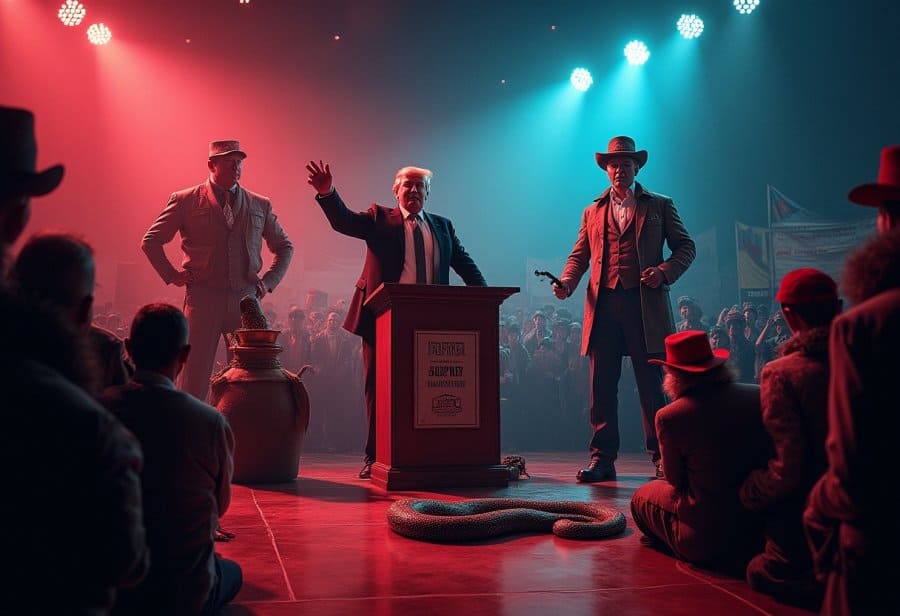
Throughout American history, spectacle and persuasion have gone hand in hand. Medicine shows in the 19th century used theatrical tricks—dramatic demonstrations, lively music, and showmanship—to sell dubious cures. These performances weren’t just about selling medicine; they were about captivating audiences and creating trust through entertainment. Today’s political rallies often borrow the same tactics—loud music, dramatic lighting, charismatic personalities—all designed to evoke emotion and reinforce a sense of authenticity.
The appeal of spectacle is rooted in our emotional needs. When immersed in a theatrical performance—whether a snake oil demonstration or a political rally—we’re more likely to trust the figure on stage. It’s not just about the product or policy; it’s about the shared experience, hope, and belonging that spectacle fosters. This emotional connection often overrides skepticism, making persuasion about feelings rather than facts.
This pattern speaks to a fundamental aspect of American culture: the desire for immediate reassurance. We want solutions that are tangible and quick, especially during crises. Whether it’s a miracle cure or a bold slogan, we’re drawn to promises of rapid results. Behind that is a deep-seated need for certainty—a craving that charismatic figures and their showmanship satisfy, even if their claims are illusory.
Our enduring fascination with charismatic leaders and simple solutions reveals a universal longing for hope in a complex world. We’re drawn to those who seem to understand us and promise to deliver quick fixes. Recognizing this tendency helps us understand why illusions and spectacle often overshadow critical thinking. It’s a challenge, but one worth facing, to foster a society that values genuine solutions over the allure of quick cures and charismatic showmanship.
From Medicine Shows to Modern Rallies: The Evolution of Spectacle in America
Throughout American history, spectacle and persuasion have been intertwined, evolving hand in hand from the days of medicine shows in the 1800s to the modern political rallies we see today. Back then, medicine shows weren’t just about selling cures—they were performances designed to entertain and enchant. Performers used humor, drama, and audience participation to create a sense of wonder and trust, even when the products they peddled were little more than tricks or fake remedies. Clark Stanley, the “Rattlesnake King,” exemplified this approach, dramatizing his demonstrations—pulling rattlesnakes from sacks, slicing them open, and claiming his snake oil could cure everything from arthritis to lung ailments. These theatrical displays blurred the line between genuine healing and spectacle, turning medicine into entertainment.
As the decades passed, political campaigns adopted similar tactics. Rallies, parades, and mass gatherings became more about emotional engagement and showmanship than about detailed policy discussions. Today’s campaign events resemble rock concerts or sporting events, with dramatic lighting, loud music, and larger-than-life personalities. The emotional charge—hope, anger, pride—becomes the currency of persuasion, often overshadowing substantive debate. Both medicine shows and political rallies thrive on their ability to evoke strong feelings, creating memorable shared experiences that foster loyalty and trust.
The power of spectacle lies in its ability to connect emotionally. Medicine shows relied on theatrical tricks—dazzling demonstrations, lively music, charismatic storytelling—to build trust and wonder. Similarly, political rallies use visuals, slogans, and charismatic figures to craft an aura of authenticity. These performances aren’t just about transferring information—they’re about stirring emotions, making the audience feel connected, validated, and hopeful. When immersed in such theatrical environments, skepticism often takes a backseat, replaced by a sense of shared purpose and belief.
Both traditions leverage storytelling as a persuasive tool. Medicine shows spun tales of miraculous cures and ancient secrets, while political campaigns craft narratives of heroism and villainy. These stories provide a sense of order amid chaos, framing struggles as battles that can be won with the right leader or remedy. This storytelling taps into our innate desire for clarity and control, making complex issues seem simple and manageable, especially when delivered with confidence and flair.
Spectacle also fosters a sense of community. When audiences are drawn into a lively performance, they’re more likely to support the figure on stage—whether a snake oil salesman or a charismatic politician. The shared experience creates bonds rooted in emotion, belonging, and hope. This emotional connection often overrides rational scrutiny, making persuasion less about facts and more about feeling part of something larger. It’s a timeless formula: entertain, engage, and inspire loyalty through spectacle.
The continuity between these traditions reveals that spectacle remains a core tool of persuasion in America. From the rattlesnake demonstrations of the 1800s to today’s high-energy rallies, showmanship taps into fundamental human instincts—our love for stories, drama, and reassurance. It makes complex issues seem simple and urgent, fostering a sense that solutions are just within reach. This enduring pattern underscores how persuasion, at its heart, is about emotional resonance more than factual accuracy.
Understanding this history clarifies why spectacle continues to dominate American culture and politics. It’s not just entertainment—it’s a reflection of our collective longing for certainty, belonging, and hope. Recognizing the power of showmanship can help us become more critical consumers of persuasion, encouraging us to look beyond the surface and question the stories we’re told. After all, the art of persuasion isn’t just about convincing others; it’s about understanding how our deepest human needs make us vulnerable to the allure of spectacle.
Why We Fall for Simple Solutions: The Psychology Behind Charisma
People are naturally drawn to charismatic figures who promise simple solutions, especially during times of uncertainty or upheaval. When the world feels complex and unpredictable—whether due to economic shifts, social unrest, or global crises—our minds crave clarity and reassurance. Leaders who project confidence and certainty seem to offer that sense of control, creating an illusion of mastery that feels particularly comforting amid chaos.
This attraction is rooted in deep psychological biases. One of the strongest is our desire for cognitive closure—the need to resolve ambiguity quickly. When faced with complicated problems, many of us prefer straightforward answers because they reduce mental effort and bring immediate relief. Charismatic leaders exploit this by framing issues in simple, memorable slogans that seem to cut through the noise, making problems appear more manageable and less overwhelming.
Humans also prefer stories with clear heroes and villains. During turbulent times, these narratives provide a sense of order, portraying struggles as battles that can be won with the right leader. Charismatic figures craft such stories effortlessly, positioning themselves as the hero or the outsider fighting chaos. This storytelling taps into our emotional core, making complex social or political issues feel solvable once we identify good guys and bad guys.
Supporters often project their hopes and fears onto these figures. When leaders speak with conviction, they evoke powerful emotions—hope, pride, anger—that forge bonds beyond rational analysis. Feeling understood and validated by someone who seems to grasp our deepest worries makes us more willing to accept their simple solutions, even if those solutions lack nuance or scientific backing. The emotional connection often outweighs skepticism about the promises made.
Culturally, admiration for strength, decisiveness, and authenticity shapes our view of leadership. From founding fathers to modern politicians, figures who seem unwavering and confident have long been celebrated. These traits suggest stability and control—qualities we desperately seek in times of crisis. Charismatic leaders appear to embody these qualities naturally, making them more appealing than cautious approaches that demand patience and detailed debate.
Our craving for instant gratification fuels support for bold personalities who promise quick results. We prefer solutions that deliver immediate relief, especially when facing difficult realities. Believing in miracle cures or bold slogans offers a mental shortcut, reducing discomfort and fostering hope. This cycle reinforces our attraction to charismatic figures who promise rapid results, even if their claims are overly simplistic or unrealistic.
At their core, these tendencies reveal that our attraction to simple solutions isn’t just about individual personalities but reflects broader human needs. Our desire for certainty, belonging, and hope makes us vulnerable to persuasion—especially when it’s wrapped in confidence and simplicity. Recognizing these psychological drivers helps us understand why illusions and spectacle often overshadow nuanced thinking, and why genuine solutions sometimes get lost in the noise of charisma.
This tendency to favor quick fixes is not new; history is filled with examples of charlatans exploiting this desire. In fact, the phrase “snake oil” has become a symbol of fraud, highlighting how easily people can be misled by promises of simple solutions. To better understand how such deception persists, reading about how “Snake Oil Became a Symbol of Fraud” can offer valuable insights into the psychology of persuasion and deception.
Stories of Persuasion: Charismatic Figures and Their Methods Through History
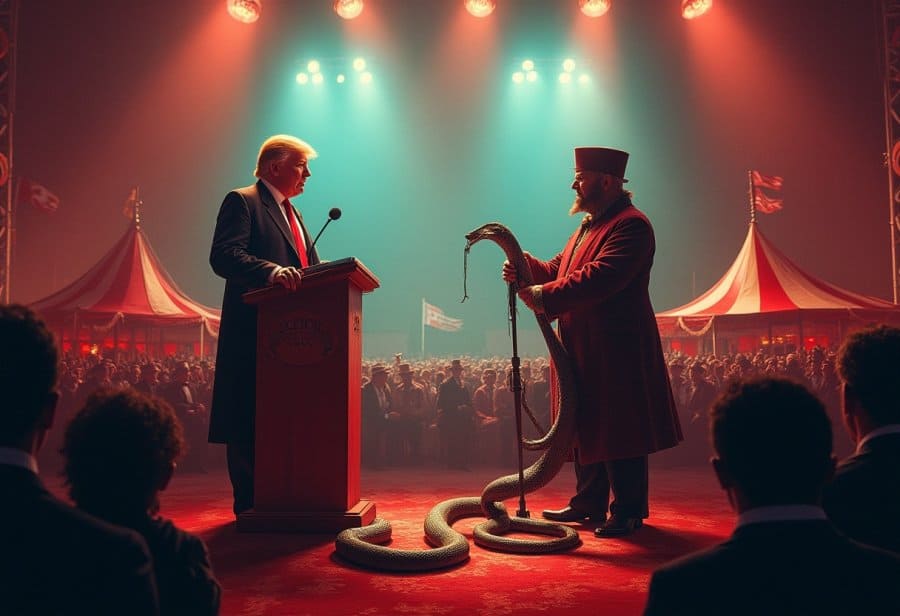
Throughout history, charismatic figures have mastered the art of persuasion by blending spectacle with storytelling. Clark Stanley, known as the “Rattlesnake King,” exemplifies this tradition. In the late 1800s, he traveled with his medicine show, captivating audiences with dramatic displays—pulling rattlesnakes from sacks, slicing them open, and claiming his snake oil could cure everything from arthritis to lung ailments. These performances weren’t just about selling remedies; they were theatrical events designed to mesmerize and build trust, even when the cures had little scientific basis. Stanley’s bravado and exaggerated claims turned medicine into entertainment, blurring the line between genuine healing and spectacle.
Fast forward to modern times, and Donald Trump’s rallies reveal how showmanship remains central to political persuasion. His events are less traditional campaigns and more high-energy performances—part revival meeting, part concert, part WWE spectacle. Trump understood that emotional engagement often outweighs policy details. His bold slogans, dramatic gestures, and larger-than-life persona created a sense of authenticity and confidence that resonated deeply with supporters. Both Stanley and Trump understood that connecting emotionally through spectacle could forge loyalty and trust, regardless of the factual content behind their messages.
The story of snake oil itself offers a fascinating layer of irony. Authentic snake oil, brought to America by Chinese railroad workers, was a legitimate remedy made from omega-3-rich Chinese water snakes, effectively treating arthritis and bursitis. But Stanley’s version erased its Chinese origins, turning it into a miracle cure in a bottle—an illusion crafted through theatrical flair. Similarly, Trump’s promises of “making America great again” served as a rallying cry, crafted to evoke hope and pride, even if the promises were overly simplistic or disconnected from complex realities. In both cases, spectacle and storytelling masked the lack of substance.
This long-standing tradition of spectacle in America demonstrates that persuasion often hinges more on emotional resonance than on facts. From the rattlesnake demonstrations to modern political rallies, showmanship captures our instincts for drama, reassurance, and belonging. These performances create shared emotional experiences that deepen supporters’ loyalty, even when the underlying message is superficial. The enduring power of this approach highlights how persuasion is rooted in feeling as much as in thinking, shaping perceptions and beliefs through emotional engagement.
Recognizing these patterns reveals why charisma and spectacle continue to dominate American culture and politics. They tap into fundamental human needs for certainty, community, and hope—especially in uncertain times. While the surface may be filled with illusions, the underlying appeal lies in our collective longing for reassurance and connection. Understanding this helps us see beyond the show, encouraging a more critical approach to the stories and figures that so often capture our imagination.

Why We Crave Certainty: Reflecting on America’s Attraction to Charisma and Simplicity
Americans’ fascination with charismatic leaders and simple solutions runs deeper than mere preference; it reflects core psychological and cultural patterns. During uncertain times—whether economic upheaval, social unrest, or political crises—many of us seek clarity and reassurance. Leaders who project confidence and promise quick fixes tap into this deep-seated desire, creating an illusion of control that feels especially comforting when the world feels unpredictable. This craving for certainty makes us more receptive to bold personalities who seem to have the answer, even if their promises lack substance.
This tendency is rooted in our need for cognitive closure—the urge to resolve ambiguity quickly and reduce mental effort. When faced with complex problems, straightforward slogans and clear narratives offer a mental shortcut, making issues seem manageable and less overwhelming. Charismatic figures exploit this instinct, crafting messages that are simple, memorable, and emotionally resonant. These promises provide immediate relief, helping us feel as if we’ve found a solution in a world that often feels chaotic.
Storytelling plays a powerful role in this attraction. Humans instinctively favor heroes and villains, especially in turbulent times. Charismatic leaders frame social and political struggles as battles that can be won with their guidance, creating a sense of order amid chaos. These narratives forge emotional bonds, making complex issues feel solvable once we identify a hero fighting against an external threat. Supporters project hopes and fears onto these figures, forging a connection that often overrides rational skepticism.
Culturally, traits like strength, decisiveness, and unwavering confidence have long been celebrated. From founding fathers to modern politicians, figures who exude certainty are seen as stabilizing forces in uncertain times. These qualities suggest stability and control, qualities we desperately seek when faced with crisis. Charismatic leaders embody these traits naturally, making them more appealing than cautious, nuanced approaches that demand patience and detailed debate.
At the core, our attraction to simple solutions and bold personalities reveals a universal human longing for hope and reassurance. We want leaders who seem to understand us and who can deliver tangible results quickly. This desire fuels a cycle where spectacle and confidence often overshadow critical thinking, making us vulnerable to illusions. Recognizing this pattern is key to building resilience—learning to value nuance and genuine solutions over the comforting but often superficial promises of charisma. Only then can we move beyond the allure of snake oil and toward real understanding and progress.