In 2011, the iconic Space Shuttle Atlantis completed its final voyage, marking the end of an era in human spaceflight after nearly three decades of pioneering exploration. This historic mission not only delivered vital supplies to the International Space Station but also symbolized resilience, innovation, and international collaboration. As Atlantis’s career spanned milestones—from deploying the Hubble Telescope to building the space station—it exemplified technological progress and adaptability. Its retirement sparked a pivotal shift for NASA, prompting new partnerships with commercial companies and international allies, while raising questions about future capabilities beyond low Earth orbit. Yet, Atlantis’s legacy endures as a beacon of human curiosity and ingenuity, inspiring future missions to the Moon, Mars, and beyond. What lessons from this storied spacecraft will propel humanity forward? Its journey reminds us that exploration is an unending pursuit, fueled by resilience, shared knowledge, and an unwavering desire to reach for the stars.

Celebrating the Historic Final Flight of Atlantis: A Farewell to an Icon of Space Exploration
In 2011, the Space Shuttle Atlantis soared into history on its final mission, marking the end of an era for NASA’s shuttle program. After nearly three decades of pioneering human spaceflight, this last journey was more than just a routine flight; it was a symbolic farewell to a spacecraft that had become an icon of exploration and innovation. As Atlantis lifted off from Kennedy Space Center, millions around the globe watched with a mix of pride, nostalgia, and curiosity about what comes next for space exploration.
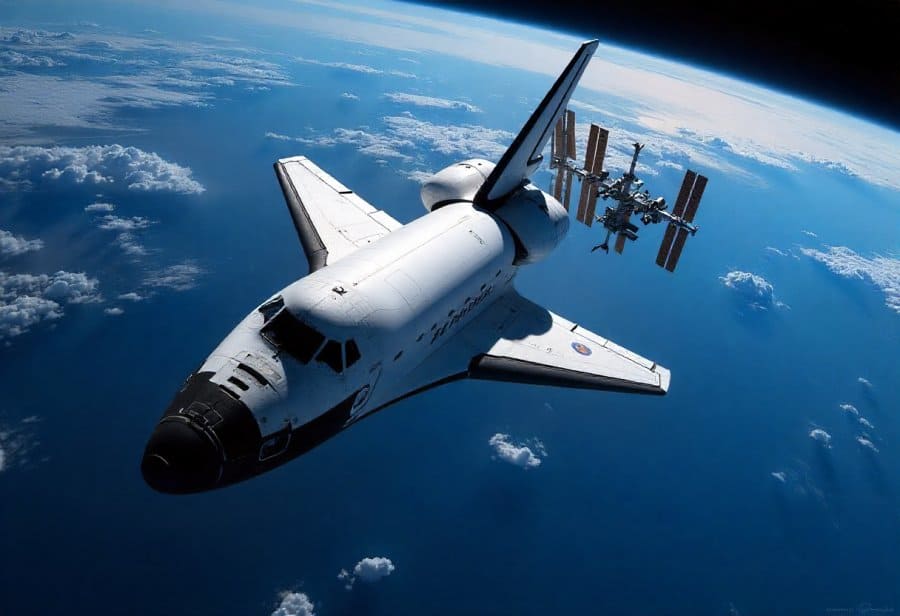
This mission carried critical supplies and equipment to the International Space Station, ensuring the station’s continued scientific work and international collaboration. It was a vital operation that underscored Atlantis’s role as a workhorse in space logistics, supporting ongoing research and station expansion. Yet, the significance of this final flight extended beyond its immediate objectives. It represented a turning point—a culmination of decades of technological progress, teamwork, and resilience that had propelled human spaceflight forward.
The Atlantis shuttle itself, designated OV-104, had been one of NASA’s most reliable and versatile spacecraft. Since its first launch in the mid-1980s, it participated in numerous historic missions, including deploying the Hubble Space Telescope and assembling parts of the International Space Station. Its nearly 30-year career reflected the evolution of space technology and the steady pursuit of pushing beyond our planetary boundaries. The final mission was a fitting curtain call for a spacecraft that had become synonymous with innovation and endurance.
As Atlantis’s final flight drew to a close, it sparked widespread reflection on the future of space exploration. The end of the shuttle era raised questions about how NASA would sustain its human presence in space without a domestic crewed launch vehicle. It also highlighted the growing importance of international partnerships and commercial space companies in maintaining U.S. capabilities. This transition marked a shift from a solely government-driven program to a broader, more collaborative approach to exploring the cosmos.
The significance of Atlantis’s last flight wasn’t just about shutting down a fleet; it was about celebrating the achievements and lessons learned along the way. This mission cemented the shuttle’s legacy as a catalyst for scientific discovery, international cooperation, and technological innovation. Its successful completion reminded us that exploration is driven by resilience, teamwork, and a relentless curiosity that refuses to be dimmed by endings.
Looking back, Atlantis’s final mission stands as a powerful reminder of what human ingenuity can accomplish. It set the stage for the next chapter—one shaped by new technologies, international collaborations, and renewed ambitions to explore beyond Earth. This historic flight not only closed a chapter in space history but also ignited the spark for future endeavors, inspiring generations to keep reaching for the stars.
Atlantis’s Journey Through Time: Milestones and Technological Triumphs
Atlantis, officially designated OV-104, joined NASA’s shuttle fleet in 1985. As the newest and most modern spacecraft at the time, its development incorporated lessons learned from earlier shuttle accidents, notably Challenger, leading to design improvements focused on safety and durability. From the outset, Atlantis proved to be a reliable workhorse, earning a reputation for dependability during its nearly three decades of service.
Throughout its career, Atlantis achieved numerous major milestones that shaped the course of human spaceflight. Its deployment of the Hubble Space Telescope in 1990 revolutionized astronomy and demonstrated the shuttle’s capacity for scientific breakthroughs. The spacecraft also played a vital role in constructing and servicing the International Space Station, delivering critical modules and hardware essential for its expansion and scientific research.
Technological advancements kept Atlantis at the forefront of space technology. Its thermal protection system was reinforced to withstand reentry heat more effectively, reducing risks during landing. Regular upgrades to the avionics systems improved navigation and safety controls, enabling it to carry heavier payloads and perform complex repair and assembly tasks in orbit. These continuous improvements underscored NASA’s commitment to safety and operational efficiency.
Atlantis’s versatility extended across a broad range of missions, from deploying satellites to repairing space telescopes and assembling sections of the space station. Its ability to adapt to different tasks made it a cornerstone of NASA’s shuttle program, pushing the boundaries of what a reusable spacecraft could accomplish. Each mission built on the previous ones, integrating lessons learned to enhance safety protocols and hardware robustness.
Resilience and innovation defined Atlantis’s journey. Its longevity was a testament to NASA’s ability to evolve and optimize its technology. The shuttle’s operational lifespan was extended through iterative upgrades, allowing it to undertake increasingly complex missions. This adaptability not only extended its service life but also set new standards for reusable spacecraft, influencing future space vehicle design.
The development and milestones of Atlantis mirror the rapid technological progress within NASA’s shuttle program. Its success stories reflect the agency’s relentless pursuit of exploration, safety, and scientific discovery. The spacecraft’s legacy is woven into the broader narrative of space innovation, inspiring confidence in reusable systems and marking a significant chapter in human spaceflight history.
In sum, Atlantis’s career exemplifies a period of extraordinary achievement and continuous improvement. From its early days to its final missions, it demonstrated that perseverance, technological advancement, and a focus on safety could sustain a spacecraft for nearly three decades. Its history not only highlights past successes but also serves as a foundation for future exploration endeavors, ensuring its influence endures in the ongoing quest to explore the cosmos.
The End of an Era: How the Shuttle Program’s Closure Reshaped NASA and Space Exploration
The retirement of NASA’s shuttle fleet marked a pivotal moment that reshaped the future of human space exploration. After nearly 30 years of continuous U.S. crewed missions launched from American soil, stepping away from the shuttle program meant losing a versatile and reliable spacecraft that had driven technological progress and fostered international partnerships. This shift created a temporary gap in U.S. capabilities, forcing NASA to rethink how it would maintain a human presence in space and push beyond low Earth orbit.
Without the shuttle, NASA’s ability to carry large payloads, repair satellites, and assemble complex structures in orbit was significantly affected. These tasks, once routine, now required new approaches and external partnerships. The agency turned increasingly to commercial companies like SpaceX and Boeing, fostering a new era of collaboration, but also introducing dependencies that raised questions about resilience and long-term independence. This transition pushed NASA to develop new spacecraft, such as Orion and the Space Launch System, though progress on these fronts has faced delays and budget challenges.
The global space community responded with a mix of optimism and caution. The shuttle’s retirement prompted debates about sustainability and leadership in human spaceflight. Many nations accelerated their own development of crewed launch capabilities, leading to a more multipolar landscape of space exploration. While this diversification opened opportunities for innovation and cost-sharing, it also underscored the risks of relying on external providers for critical missions, emphasizing the need for resilient, flexible systems.
The end of the shuttle program also underscored the importance of international cooperation. The International Space Station, largely built and maintained through Atlantis’s missions, became a symbol of what global partnership can achieve. Its continued operation relies on shared resources and expertise, setting a precedent for future projects. The shuttle’s role in this international effort reinforced the idea that space exploration is a collective endeavor, one that transcends national borders.
Despite these challenges, the shift away from the shuttle sparked innovation. New commercial and international collaborations opened doors to more frequent and cost-effective missions. The lessons learned from Atlantis and its predecessors laid the groundwork for safer, more efficient spacecraft and operations. This evolution reflects a broader understanding that resilience in space exploration depends on adaptability, shared knowledge, and continued technological advancement.
In essence, the end of the shuttle era was not a simple conclusion but a catalyst for transformation. It prompted NASA and the world to rethink strategies, embrace new partnerships, and invest in emerging technologies. While it temporarily paused U.S. human spaceflight from its own launch pads, it also paved the way for a more diverse and sustainable future—one driven by innovation, collaboration, and an unwavering human desire to explore beyond our planet.
The transition also highlighted the importance of documenting and reflecting on the shuttle program’s history. Understanding the legacy of Atlantis within NASA’s shuttle program history provides valuable insights into how past achievements continue to influence current and future missions. As NASA advances its exploration initiatives, recognizing this legacy helps ensure that the lessons learned shape a sustainable path forward.
Legacy in the Stars: How Atlantis’s Last Mission Continues to Inspire Future Missions
The final flight of Atlantis in 2011 did more than mark the end of a storied chapter in human spaceflight; it laid the groundwork for the next phase of exploration. Its success demonstrated that human ingenuity, combined with technological progress, can achieve extraordinary feats even after nearly three decades of service. The lessons learned—from safety protocols to international teamwork—are now integral to designing future spacecraft and missions beyond low Earth orbit. These insights help shape a safer, more resilient path forward, emphasizing the importance of adaptability in exploration.
Atlantis’s last mission also reaffirmed the power of international collaboration. The International Space Station, built and maintained with Atlantis’s cargo and crew missions, exemplifies what nations can accomplish when working together. This spirit of cooperation continues to drive current and future efforts, pooling resources and expertise to push human presence further into space. Atlantis’s role in the station’s construction and resupply set a precedent that remains central to global exploration initiatives.
Beyond the technical achievements, Atlantis’s final flight became a symbol of human curiosity and resilience. Media coverage, documentaries, and social media tributes transformed its journey into a rallying cry for exploration’s enduring spirit. It reminded us that space endeavors are collective pursuits, capable of uniting diverse cultures and inspiring new generations. This shared sense of wonder fuels ongoing innovation, ensuring the drive to explore remains vibrant and unstoppable.
The technological advancements showcased during Atlantis’s last mission—such as improvements in thermal protection and avionics—have become foundational for future spacecraft. These innovations inform the design of newer vehicles that prioritize safety, efficiency, and versatility. The knowledge gained over nearly 30 years of service continues to influence the development of exploration platforms destined for the Moon, Mars, and beyond, ensuring Atlantis’s legacy endures in every new step taken into the cosmos.
Looking ahead, the story of Atlantis’s final flight underscores that exploration is an ongoing journey, driven by curiosity and a relentless desire to discover. The lessons it imparted about safety, resilience, and international cooperation continue to shape the strategies and ambitions of space agencies worldwide. As NASA and its partners prepare to return humans to the Moon and venture toward Mars, the pioneering spirit embodied by Atlantis will inspire each new mission, fueling humanity’s unending quest to explore the unknown.

Looking Forward: Reflections and the Next Horizon in Human Space Exploration
The end of Atlantis’s storied career marks more than just a conclusion; it signals a new chapter filled with fresh opportunities and ongoing challenges in space exploration. Its last mission proved that human ingenuity and technological progress remain our greatest tools in pushing beyond familiar boundaries. The lessons learned—from safety protocols to international collaboration—are now guiding the development of next-generation spacecraft and missions. These insights aim to make future explorations safer, more efficient, and better equipped to confront the complexities of venturing into the Moon, Mars, and beyond.
Atlantis’s final flight reaffirmed the vital role of international cooperation. The International Space Station, built and maintained with Atlantis’s cargo and crew missions, exemplifies what nations can achieve when working together. This spirit of partnership continues to shape current and future exploration efforts, pooling resources and expertise to expand humanity’s footprint in space. The shuttle’s contribution to the station’s construction and resupply laid a foundation that still influences collaborative projects today, emphasizing that space exploration is a shared human endeavor.
Beyond its technological achievements, Atlantis’s journey became a symbol of human curiosity and resilience. Media coverage, documentaries, and social media tributes turned its mission into a rallying cry for exploration’s enduring spirit. It reminded us that space is a frontier that unites diverse cultures and inspires generations. This collective sense of wonder fuels ongoing innovation, ensuring that the drive to explore remains vibrant and unstoppable, driven by a shared desire to uncover the universe’s secrets.
The innovations demonstrated during Atlantis’s last mission—such as advances in thermal protection and avionics—continue to serve as a foundation for future spacecraft. These developments inform the design of new vehicles that prioritize safety, versatility, and sustainability. The knowledge accumulated over nearly three decades of service not only shaped the shuttle’s legacy but also provides a blueprint for the resilient exploration platforms that will carry humanity forward into new frontiers.
Looking ahead, the story of Atlantis’s final flight underscores that exploration is an ongoing journey fueled by curiosity and determination. The lessons it imparted about safety, resilience, and international teamwork remain central to shaping future missions. As space agencies worldwide gear up for lunar landings and Mars expeditions, the pioneering spirit exemplified by Atlantis will continue to inspire each step. Humanity’s unrelenting quest to explore the unknown persists—driven by the same curiosity and resilience that propelled Atlantis for nearly 30 years.